


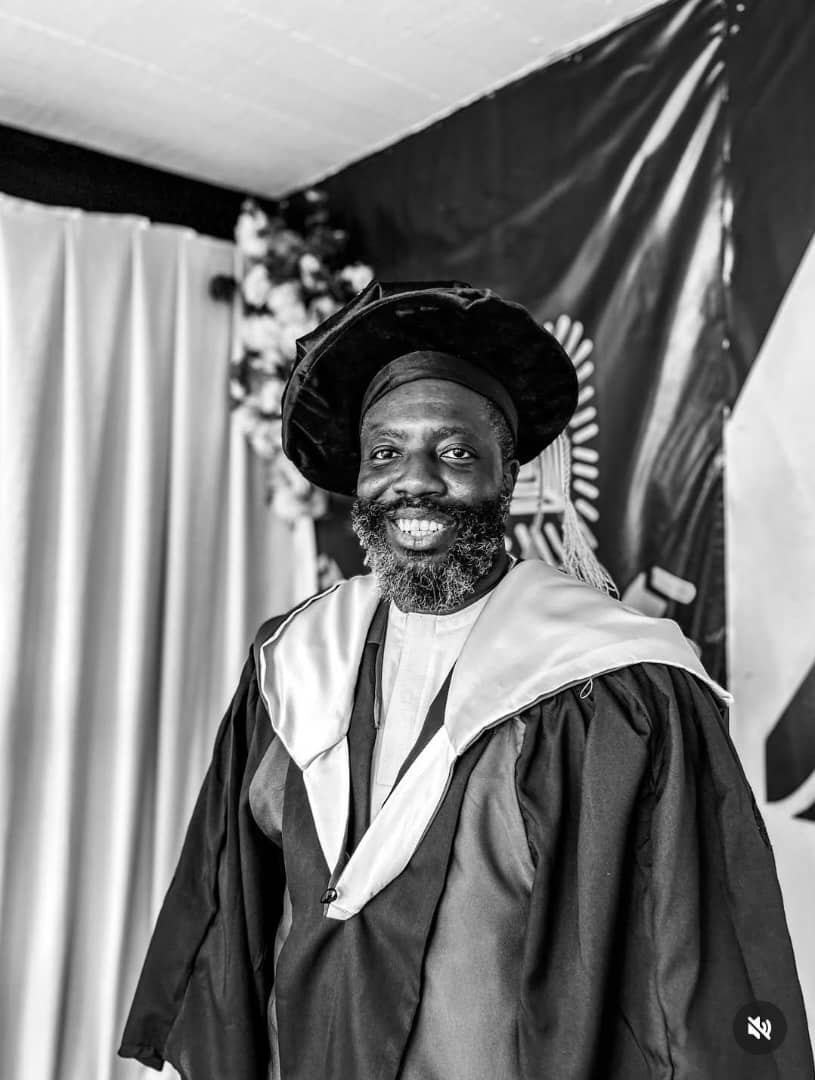
Professor Segun Aina, a Lecturer in the Department of Computer Engineering at Obafemi Awolowo University (OAU), has joined the league of professors in Nigeria at the age of 39, making him one of the youngest lecturers, not just in OAU but in Nigeria at large.
Background
The new Professor obtained his Bachelor of Engineering in Computer Systems Engineering from the University of Kent, United Kingdom, and a Master’s degree in Internet Computing and Network Security from Loughborough University in 2009. He later obtained his PhD degree (PhD in digital signal processing) from the same institution.
In an interview with ACJOAU, he shared some of the insights and reflections from his journey, covering his path to professorship, his work ethic, sacrifices, and the legacy he hopes to leave behind.
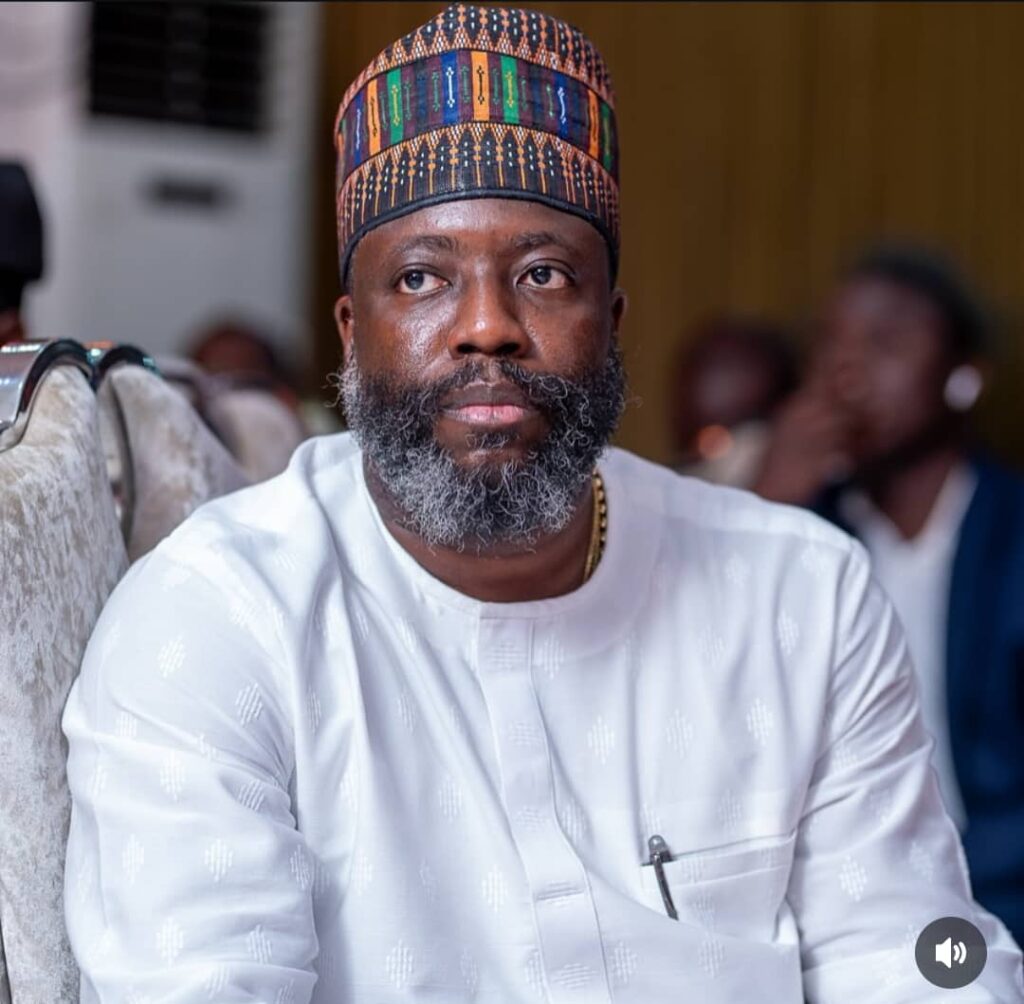
Becoming a professor of computer engineering at 39 is a major milestone. Have you ever imagined achieving professorship at this early stage?
To be honest, yes, I did imagine it. I worked towards it and tried to plan it out. I think the part that humbles me is the fact that, you know, it is for man to plan, but it’s ultimately God’s will that prevails. I finished my PhD before 30, and so I knew that if I did not have any delays, it was possible that I would complete the course of progression before the age of 40, which was my target. And I had to work assiduously towards it. So yes, I thought it possible.
What does this accomplishment mean for you personally?
For me personally, it is probably the single biggest achievement, career-wise wise of my life. Both my parents are academics, so it is something that I look forward to using to honour them.
We can say that this is a goal accomplished, but when you look over your journey, what were the key decisions and habits that contributed to you reaching this stage at a very young age, like this?
I think hard work, but I think beyond hard work; I think also smart work. You know, it is not just about working hard; you need to work smart.
For example, certain aspects of your career as an academic do not count towards promotion directly, but they count towards you making a career, and they count towards you making a good impression with the people you work with. Other aspects count directly towards your promotion. So being able to find that balance between doing the things that I was supposed to do, doing the things I needed to do, and doing the things that I wanted to do, finding that balance and not majoring on the minor allowed me to make progress.
READ ALSO: Professor Gbemisola Adeoti Wins 2025 ANA Poetry Prize for ‘Stoning the Wind’
Research is harder to do with fixed lectures, fixed meetings, and administrative tasks with deadlines. Research is the easiest thing to allow to suffer, because nobody will catch you if you do not publish. But you know you will get into trouble if you do not attend your lectures, meetings, and perform your administrative tasks.
So, being able to make sure that I met the requirements that were needed for promotion required me to make sure I found a balance between all those things.
Speaking about balance, there is a saying that goes ‘no pain, no gain.’ For you to attain this stage, there will obviously be some sacrifices you’ve made. What are these sacrifices, and how did you decide what to give up and where to stay consistent?
Well, I think it is just about prioritising. I do the most important first and then distribute the remaining time to the outstanding things.
For example, I know sleep and some family time were major casualties. My family is based in Lagos, so I had to shuttle, but it also ensured that when I was in Ile Ife, I was able to dedicate the majority of my time to work and meet my goals.
I also got a lot of support from colleagues. No man is an island. I did not walk in isolation; I did not walk in a silo. I was conducting research with a few of my colleagues consistently. When you are tired, they are ready to go; they help you bridge that gap.
You completed your undergraduate and postgraduate degrees in the UK. Has this in any way shaped your approach to lecturing and researching in Nigeria?
Yes, obviously. I have experienced a certain way of doing things, a practical way of doing things, but I must say there is nothing special about the way education is abroad.
Raw natural talent that exists here is as good as, or even better than, what you find abroad; there, they just have the benefit of better funding, more equipment, better support services, accommodation, and things like that, and things to help their standard of living.
Beyond that, if we are speaking strictly academically, on raw academic talent, there is as good talent here as you will find abroad. I have met not one, not two, not three of my students who I know are smarter than me; I just have more experience than they do.
But yes, it did shape me because I have experienced one way, I am seeing another way, and I am trying to produce a hybrid version of it.
Do you think Nigeria is doing enough to take the full potential of the academics trained abroad?
Nigeria cannot really force that decision. The responsibility is on people trained abroad to make themselves available and contribute. Yes, the country can try to create a more enabling environment to attract them, but in the end, it’s still their personal choice to return and serve.
And that choice is not based on logic alone; patriotism plays a role. Nigeria is a very sentimental place, and patriotism is a sentimental emotion. So we need to keep shaping and reshaping that sense of duty in people who are here, those planning to leave, and those coming back. It’s a cultural issue, not just something the government can fix; it is on all of us.
Why Lecturing? And is being patriotic why you chose Nigeria and not elsewhere?
You are right. Part of my previous answer already spoke to this. I am a patriot. I am hugely passionate about Nigeria as a project. I believe in the Nigerian dream.
I had a firm belief that my success and prosperity were closely tied to Nigeria. I was committed to it. I lived abroad for 11 years; at the time, all you needed was 10 years to get permanent residency. I deliberately did not pursue that because I did not want a way out. I wanted to ensure that I was fully committed to the prospect of building a successful career here.
In terms of why lecturing: when you do a PhD, there are two obvious routes for you; one is consulting, the other is academia. As I said, both my parents are in academia: my dad is a professor, and my mom also retired as a lecturer. So the moment I committed to doing a PhD, I think it was a no-brainer.
Teaching on its own and sharing knowledge are also things I am passionate about. Some people have the benefit of doing what they love for money; sometimes you have to divide it, do what you love in one place, and make money in another, and I just, you know, passing on knowledge is something that I actually enjoy doing.
And interestingly, I consider myself to be an average student, academically. So I felt like I had something different to offer. Most of your lecturers are very smart; they were first-class students, and they would typically be at the top end of their classes as students.
Going through your work experience, we learnt that you co-founded an IT solution company, and then you have been serving various leadership roles and other roles. How do you balance this with lecturing?
Honestly, I think in today’s Nigeria, if you look at anyone who is truly successful, you will see that there is room for multitasking and a multifaceted approach to building a career. You cannot just do one thing—you have to do some volunteering, some community service, and some community building, and you have to show leadership. For me, I deliberately set out to build myself into a complete package, and I knew there were milestones I had to cross on that journey.
And the truth is, you cannot do just one thing at a time because most people are doing just one thing. So if you want to get ahead and move up, you need to join hands with other people and collaborate to do more than one thing at once. That is the ‘cheat code’ collaboration. The people who are doing all these things don’t have two heads; they’re just collaborating and still making progress. So why not us?
Now, on mentorship, people often talk about it as if it is only the mentee that benefits, but for me, mentorship is also part of my learning. When I am mentoring someone, and we are constantly discussing the issues around them, I am gaining experience about what they are going through without necessarily going through it myself. People say experience is the best teacher, and I agree, but my own spin is that it does not have to be your experience; it can be somebody else’s. So yes, you give a lot when you mentor, but you also gain a deeper understanding of their choices and decisions, and even the act of passing on knowledge forces you to go over it again and again, which strengthens your own learning.
For people who are looking to follow a similar pattern to yours, what does excellence practically look like to you? Assuming someone comes to meet you and says, ‘Okay, I am not sure about how I should measure my success,’ how would you advise them?
Success is a very relative thing. There is no objective definition of success for me; it should be measured against yourself.
What did you set out to achieve? How realistic was that goal in the first instance? And how close did you come to meeting that goal, or how far did you exceed that goal relative to how realistic it was in the first place?
In certain areas where I fall short academically, for example, I make up for it in other ways, unlike people who are not as proficient in those other ways but are more proficient academically. So different strokes for different folks.
What kind of legacy do you want to leave behind at OAU and in the Nigerian education system as a whole?
One of my own passions within academia is building a bridge between academia and industry, which I am personally very passionate about.
We cannot expect to be in a classroom teaching people who are destined for companies and industry without ourselves practising what they are going to be doing in industry. So I think building that bridge is kind of what I ultimately hope my legacy will be towards the end of my career.
Finally, what message do you have to pass across to those who have read your story and are feeling inspired and wanting to make a difference?
My simple message would be to just come up with a plan. To fail to plan is to plan to fail. Do not be afraid to come up with a plan. It doesn’t matter if your plan works out or not; just come up with a plan.
Have goals and targets, work towards them, continuously measure and evaluate yourself, give feedback, and see how well you are doing in reference to those.