


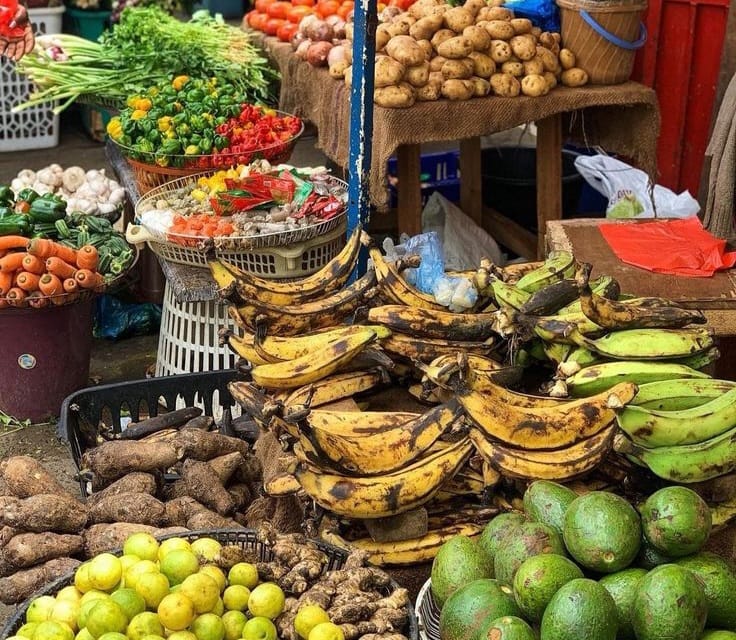
Students from various departments on the Obafemi Awolowo University (OAU) campus have described their dietary habits, which are often compromised by fatigue accumulated from academic stress and other issues arising from financial and economic costs, noting that healthy eating should always be a priority.
These students shared their views in an interview with ACJOAU, outlining different practices and suggesting ways to maintain healthy eating habits despite unfavourable conditions.
Moshood Fadeelat, a part 3 Broadcast Journalism student, said, ‘Healthy eating to me basically is just to find a balance in my meals. A proper meal with protein and enough water. And food that sustains my energy. Since I try to work around the budget, I am still very conscious of healthy eating, because health is wealth.’ She added, Even if I am considering affordability, I still try to make sure it is nutritious to some extent, just by working around what I have and not doing any extra much, while still making out a healthy meal from it.’
READ ALSO: Fajuyi Hall Gate Closure Leaves Registered Occupants Stranded
Explaining the need to make up for lost nutrients, and how important he personally takes eating healthy, Dewale Badmus said, ‘Consciously or subconsciously, I just try to satisfy my appetite and eat whenever I need to. Sometimes, I skip breakfast because of my busy schedule, but I make sure I cover up by eating a solid lunch and dinner.’ ‘I refuse to let the rising cost of food affect my nutrition. I still eat what I want, and I spend at least ₦20,000 on food weekly. However, in cases I don’t want to spend much, I just cook what I know is nutritious enough to sustain me and work for other meals. Beans are a good example,’ he added.
In her own response, Fehintola Balogun, a part 4 student from the department of Nursing science, emphasised the need to always include fruits and vegetables in one’s meals, stating that it is more important to spend well on one’s feeding than suffer the aftermath of not eating well.
In her words, ‘I try my best to eat healthily, and I consciously cut down on foods that do not provide essential nutrients and vitamins. I buy fruits like bananas and oranges when I can, including vegetables such as carrots, and ensure I consume protein sources like eggs. I rarely spend much on food every week because I mostly cook at home, and whenever I go to the market, I prioritise eating healthy on my market list,’ she said
Choosing something solely because it is affordable, knowing it could negatively affect my health, is not an option for me. While it is not always easy, I am becoming more intentional about making better food choices. I advise that people include fruits and vegetables in their market list and avoid choosing affordability over quality all the time. It is better to invest in good food than spend thousands of naira on treatment for preventable health issues,’ she added.
Furthermore, identifying an obstacle to healthy eating and how she manoeuvres her way around it, another part 4 student from the department of Economics said, ‘My biggest challenge with eating healthy is lack of time. School work is draining, and money, too, can be a hindrance at times.’ She further stated, ‘Regardless, I try my best to consciously eat well because I know the health benefits associated with it. I deliberately buy food in bulk and prepare my meals myself to reduce junk intake and ensure I feed well. My go-to healthy meal is bread, egg, and fruit juice. I also recommend cooking and sharing food costs with friends, as well as buying local foods when one is busy.’
According to Temitope Eretiloye, a part 4 Pharmacy student, ‘Healthy eating as a student on campus can be hard at times or sometimes seem impossible, but we still have to take a well-balanced diet because doing otherwise can be dreadful. I buy fruits periodically, and sometimes, I make sure I do not repeat the same food in a week. I purchase food from restaurants at times, and on other days, I make my food myself.’
Temitope added, ‘If I foresee running low on cash, I’ll rather make an assorted stew in excess, so I will be able to cook a variety of food with it that I have on hand already. Complementing one’s food with protein like fish, meat, and eggs is very important.’
Meanwhile, a part 3 law student admitted she is not practising healthy eating, citing school stress and economic factors as major hindrances. She, however, acknowledged the importance of having a balanced diet and mentioned how she manages to cover up.
She said, ‘My eating habits as a student are not actually good. The skipping of meals, going to class early, and coming back from class so exhausted with no strength to cook all contribute to this. Sometimes, I just survive on snacks and not proper food.’
‘The rising cost of food has also definitely affected what and how I eat, but despite limited funds, whenever I plan to eat healthy, I plan the money well. I calculate how to spend the money and spend it only on the important ingredients for my meals, nothing secondary. In essence, for the days I’m free and in the right mood, I eat very well. If I had ₦2,000 to eat, for example, I would make a bowl full of fried plantain and fried eggs.’